
01
If you stopped paying tomorrow
Picture a Tuesday. A founder's ad account gets flagged for review. No warning, no human to call, just an automated email. By Thursday, traffic is down 80 percent. Signups flatline. The team that believed it had a growth engine discovers it had a faucet, and someone else's hand was on the tap.
Versions of this story happen all the time. They rarely make it into case studies, because nobody enjoys writing about the week they learned they didn't own their business.
Underneath it sits one uncomfortable question: if you stopped paying tomorrow, what would still be working for you?
For most early-stage companies, the honest answer is almost nothing. This post is about changing that answer, and about why we built an agency that refuses to run ads.
02
Rented attention and owned attention
There are only two ways to get someone's attention. You can pay for it, or you can earn it.
Paid attention is rented. It lasts exactly as long as the payment. The moment you stop, it disappears and leaves nothing behind. No asset, no ranking, no memory in anyone's head. Just a line item on last month's statement.
Earned attention is owned. A blog post that answers a real question better than anyone else. A founder story that people retell at dinner. A reputation for knowing your subject cold. These keep working long after you stop working on them.
Renting isn't wrong. Every business rents something. The mistake is renting while believing you're building. That's how companies raise a round, spend it on traffic, and arrive at the next raise with a bigger burn and no moat.
03
The two-year test
Here's a simple filter. Run it against every growth activity you're doing right now.
If I stopped touching this today, would it still be working for me in two years?
A paid campaign: No. It dies the moment the card declines.
A blog post that ranks for the exact problem your customer types into Google at 11pm: Yes. It works while you sleep, while you fundraise, while you take a week off.
A clear, specific about page: Yes. Every investor, hire and customer who ever evaluates you will read it.
A founder story told well: Yes. People you'll never meet will retell it for free.
A tested understanding of who your customer is: Yes. It makes every future decision cheaper and faster.
Most founders who run this test find that the majority of their effort goes into things that expire. The fix isn't to work harder. It's to move effort from the left column to the right one.
04
Compounding is the only real magic
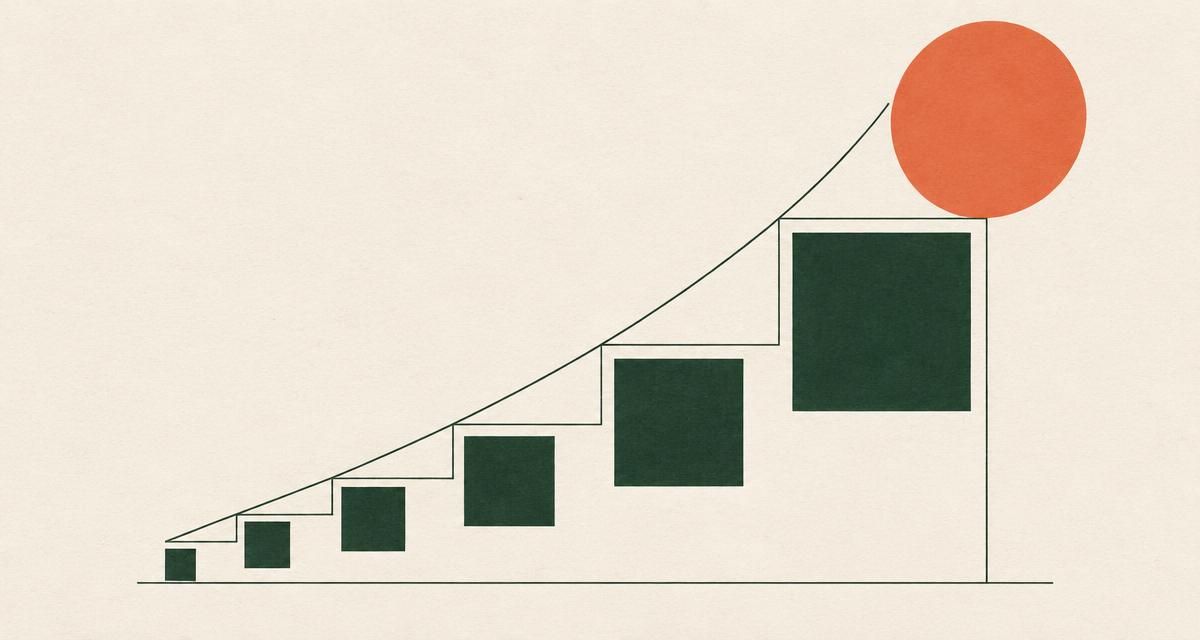
Money compounds. Knowledge compounds. Reputation compounds. Content compounds too, in a very literal way. A post that ranks brings visitors. Some of those visitors link to it and share it. Those links push the ranking higher. The higher ranking brings more visitors. Each loop feeds the next.
Ads run the other direction. As more competitors discover a channel, prices rise. Audiences get tired of seeing you. Creative wears out in weeks. You run faster to stay in the same place.
One curve bends up with time. The other bends down.
Early-stage founders almost always have more time than money. It's strange, then, that so many pick the strategy that turns money into results and ignore the one that turns time into results.
05
Why smart founders reach for ads anyway
This isn't a stupid choice. It's an understandable one, and it's worth being honest about why.
Ads are fast. Launch on Monday, see traffic on Monday. Organic takes months to show its curve.
Ads are measurable. Every click has a cost, every cost has a dashboard. Investors like dashboards.
Ads feel like control. Turn the dial up, get more. Turn it down, get less. It feels like steering.
But the control is an illusion. You're steering a car on a road someone else owns, and they can change the speed limit, reroute the traffic or close the road whenever they want. The algorithm shifts. Costs double. A competitor with a bigger round outbids you on every keyword you care about. You were never in control. You were a tenant with a nice dashboard.
Ads amplify. They don't create.
Paid acquisition works beautifully on top of something that already converts: a clear message, a known customer, a site that explains itself in five seconds. Without that foundation, ads just pay to show more people that you're confusing.
Most early-stage companies don't have a traffic problem. They have a clarity problem. If your message doesn't convert at 100 visitors, it won't convert at 100,000. You'll just lose money faster, with better data about how you lost it.
06
Search is becoming a conversation
People increasingly ask ChatGPT, Perplexity or Google's AI answers instead of scrolling a page of links. They type full questions. They get one synthesized answer, often with a few sources cited. The winner isn't whoever spent the most. It's whoever explained the thing best.
That's the game of AEO, answer engine optimization. Be specific. Answer the real question in the customer's words. Go deeper than anyone else. Be mentioned where people talk. Be consistent about who you are.
This is the best news small companies have had in a decade. The machine deciding who gets recommended doesn't care about your ad budget. It cares whether you actually know what you're talking about. You can't buy that position. You can only earn it.
07
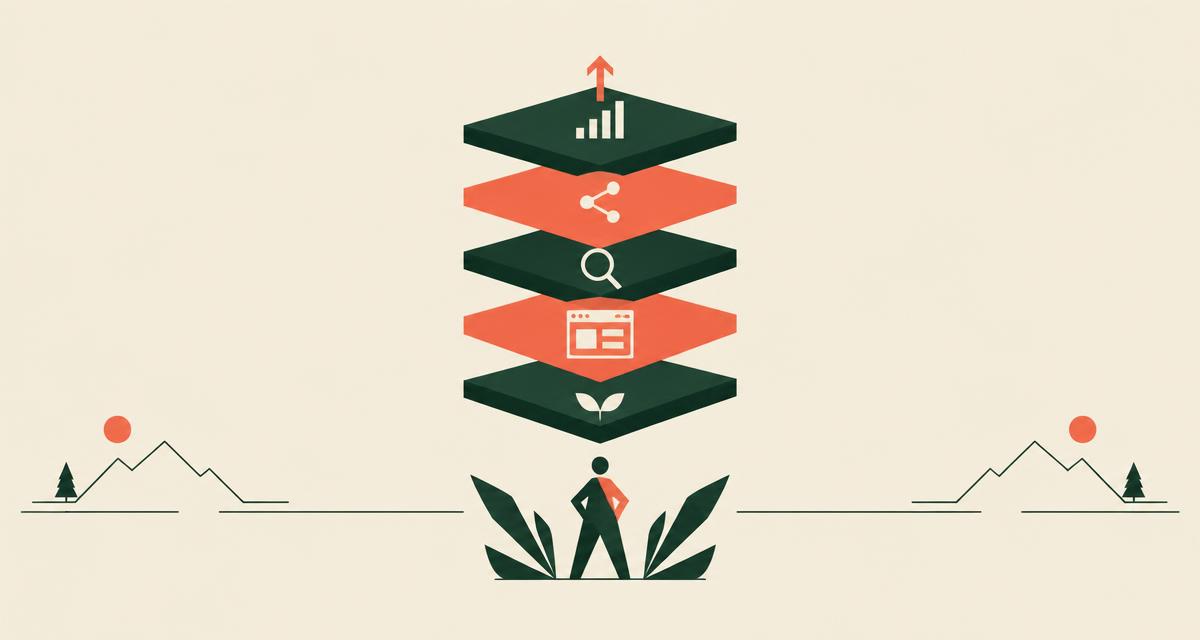
The owned growth stack
Building has five layers, and the order matters. Each one makes the next one work.
1. Story. Why you exist, what you believe and who you're for, pulled from the founder rather than invented by a copywriter.
2. Customer. A profile proven with real tests in the places your customers already talk, not a persona dreamed up in a meeting.
3. Website and search. A site that explains itself instantly, and content built to rank and get cited because it's the best answer available.
4. Content. A steady body of work that answers what your customers are asking, written in their language.
5. Social engine. Organic content produced at volume, in your voice, distributed without a media budget.
Skip a layer and the ones above it wobble. Most companies start at layer five, wonder why nothing sticks, and throw money at it. Start at layer one.
08
When ads actually make sense
To be clear, we're not anti-ads. We're anti-ads-first.
Once your message converts organically, once you know who your customer is and what they'll pay, ads can be excellent. They pour fuel on a fire that's already burning. At that point the math works and the risk is low.
That's exactly why we don't run them. Our job is to build the thing worth amplifying. Plenty of people can pour fuel. Very few help you build the fire.
09
Start this week
Run the two-year test on everything you did for growth in the last 90 days. Sort it into expires and compounds. Look hard at the ratio.
List the ten questions customers ask most before they buy. Pull them from sales calls, support tickets and DMs, word for word.
Pick the best one and write the most honest, specific, complete answer on the internet. Then do the next one.
Organic is slow to start and fast to finish. Ads are fast to start and never finish, because you pay forever. Short-term games reward whoever spends the most. Long-term games reward whoever understands their customer best. Pick the game where time is on your side.
Keep reading
Brand Story / 5 min
The Third Answer: How to Find the Story Only You Can Tell
Market Research / 6 min
Your ICP Is a Guess Until Strangers Prove It
Growth Strategy / 5 min
Your Ads Didn't Fail. Your Foundation Did.
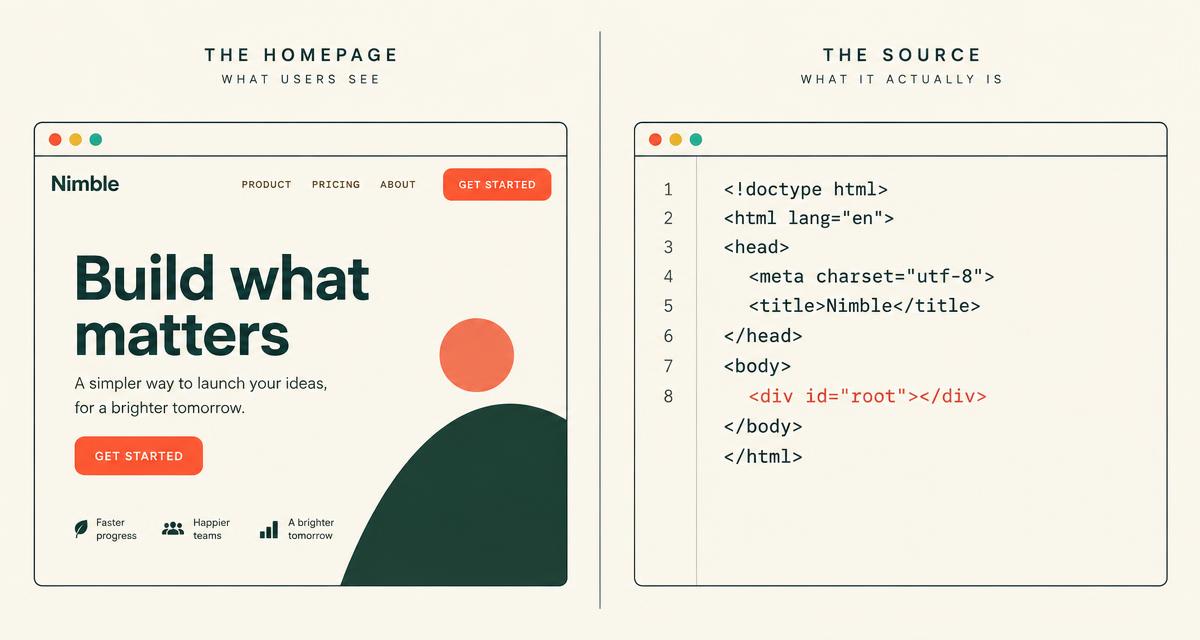
AI Search / 8 min
Why AI Can't See Your Website (The JavaScript Problem)
Hiring an Agency / 8 min
What Does an Organic Marketing Agency Actually Do?
Hiring an Agency / 8 min
9 Questions to Ask Before Hiring an Organic Growth Agency